
It starts with a subtle warmth against your palm, then a sudden stutter in your favorite app, and finally—the black screen of death. In the humid, high-energy environment of Miami, “heat check” isn’t just a basketball term; it’s a daily reality for our smartphones and tablets. When a device chronically overheats, it isn’t just a battery issue. More often than not, the microscopic components on your motherboard are literally choking.
As repair specialists who see hundreds of “unfixable” devices, we’ve realized that standard modular swaps aren’t enough. If your phone feels like a hot plate, you aren’t looking for a new screen; you are looking for a surgical intervention. Micro-soldering for overheating logic boards is the thin line between a restored device and a $1,200 replacement bill.
Section 1: Why Modern Logic Boards Turn Into Ovens
A logic board is a marvel of engineering, packed with thousands of capacitors, resistors, and integrated circuits (ICs) spaced mere microns apart. Heat is the natural byproduct of processing power, but when a component fails—due to a tiny short or a cracked solder joint—the electrical resistance spikes. This creates a “hot spot.”
In Miami’s climate, external ambient temperatures often exacerbate these internal thermal issues. When a specific chip, such as the Power Management IC (PMIC), begins to fail, it draws excessive current. Without the precision of professional iPhone repair in Miami, these boards eventually suffer from “thermal runaway,” where the heat becomes so intense it melts the very solder holding the board together. This is a high-stakes scenario where traditional repair shops usually give up, claiming the “board is fried.”
Section 2: The Precision of Micro-Soldering vs. Component Swapping
Most “repair” shops are actually “part swappers.” They can change a battery or a charging port, but they can’t touch the “brain” of the device. If the overheating is caused by a localized short on a VCC_MAIN rail, no amount of new batteries will fix it.
Finding the Needle in the Silicon Haystack
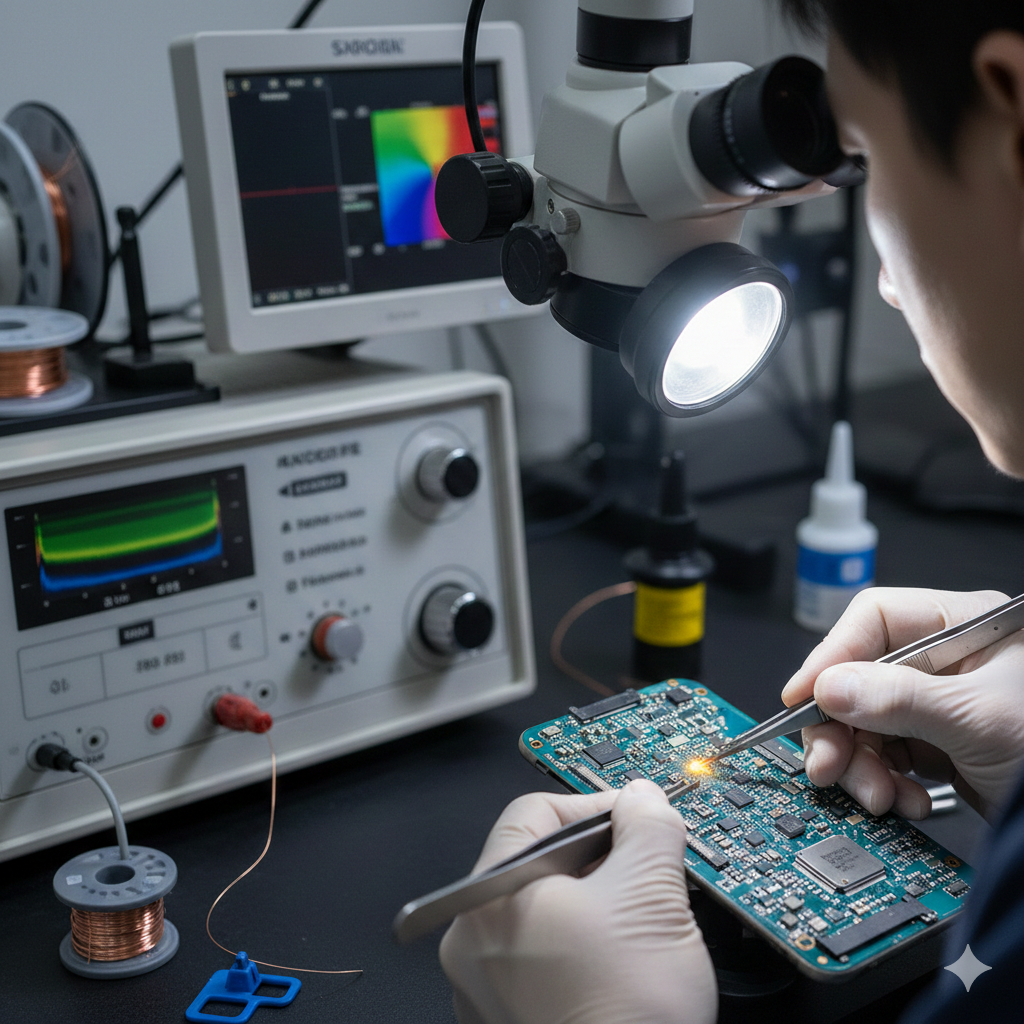
To fix an overheating logic board, we utilize thermal imaging cameras to identify the exact capacitor that is glowing white-hot. Once identified, the process requires:
- High-Power Microscopy: To see components that are smaller than a grain of sand.
- Precision Heat Control: Using specialized rework stations to lift failed chips without damaging surrounding components.
- Expert Reballing: Cleaning the pads and applying new, high-quality solder spheres to ensure a perfect connection.
Whether it is a specialized Samsung repair in Miami or a complex iPad logic board recovery, the goal is the same: restoring the circuit’s integrity so electricity flows without resistance (and without heat).
Real-World Observation: The “No-Touch” Disease
We often see iPads used for heavy gaming or professional design that suddenly develop “ghost touching” or total touch failure accompanied by extreme heat near the top of the board. By performing iPad repair in Miami using micro-soldering, we can replace the specific Touch IC or filter, cooling the board down instantly and saving the user’s data.
Section 3: When to Seek a “Surgical” Repair
If you are experiencing any of the following, your device is likely a candidate for micro-soldering rather than just a simple part replacement:
- Rapid Battery Drain: The device gets hot and loses 20% battery in ten minutes even when not in use.
- No Image/Half-Dim Screen: Often caused by a blown backlight filter due to a short circuit.
- Specific Error Codes: iTunes errors (like Error 4013) during an update often point to NAND or CPU power issues.
If your device has sustained liquid damage or a hard drop, internal shorts are common. In these cases, we strongly recommend a professional consultation. You can get an instant quote to see if a board-level repair is viable for your specific model. Avoid “DIY” motherboard repairs; the risk of bridged connections or “popping” the CPU with too much heat is extremely high and usually irreversible.
Even gaming systems aren’t immune. Dust buildup combined with thermal paste degradation leads many to seek game console repair in Miami to fix APU (Accelerated Processing Unit) joints that have cracked under thermal stress.
Section 4: Conclusion and Final Thoughts
The “disposable” tech culture would have you believe that once a motherboard fails, the device is trash. But with the right expertise, that isn’t true. Micro-soldering for overheating logic boards is a sustainable, cost-effective way to keep your high-end tech running for years to come. It requires a blend of electrical engineering knowledge and steady-handed artistry.
By addressing the root cause—the microscopic short—rather than the symptom, we ensure your device stays cool, fast, and reliable. Don’t let a “fried” board diagnosis be the final word. There is almost always a way back through the microscope.
FAQs
Q: How do I know if my overheating is a battery or a logic board?
If your device gets hot while turned off or while sitting idle on the home screen, it is likely a logic board short. If it only gets warm during heavy use or charging, it may just be the battery or software.
Q: Is micro-soldering permanent?
Yes. When performed correctly with leaded solder (which is more flexible than the factory lead-free solder), the repaired joints are often stronger and more heat-resistant than the original factory connections.
Q: Can data be saved from a dead, overheating board?
Absolutely. Micro-soldering is the primary method for “Data Recovery.” Even if the board won’t fully function again, we can often stabilize it enough to extract your photos and files.
Disclaimer: This information is for educational purposes regarding the complexities of electronics repair. Logic board repair involves high heat and microscopic components; we recommend only certified technicians attempt these procedures to avoid permanent device failure or safety hazards.